Reviving the 8-Bit Aesthetic: The Power of Pixel Buttons and Retro UI Elements
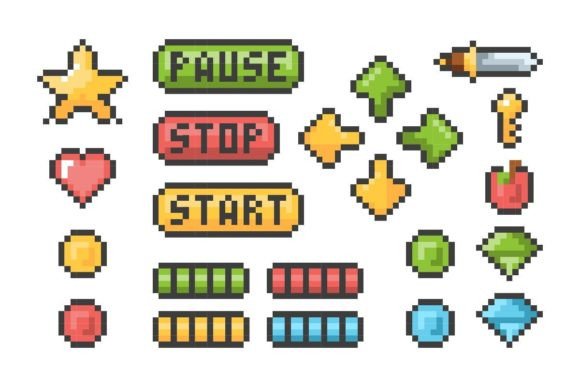
The digital landscape is often obsessed with sleek gradients, glassmorphism, and hyper-realistic shadows. Yet, there is a persistent, vibrating undercurrent pulling designers and developers back to the roots of interactive media. This isn't just nostalgia; it is a deliberate stylistic choice that communicates fun, simplicity, and immediate recognition. At the heart of this movement are Pixel Buttons, those blocky, grid-aligned interface elements that defined an era of gaming and computing. When you integrate assets like a Retro Video Games Trophy or specific pictogram menu bars into a modern project, you aren't just decorating a page; you are tapping into a shared cultural memory that users instantly understand.
Why Pixel Art Still Dominates Modern Web Design
It might seem counterintuitive to use low-resolution graphics on 4K monitors, but the appeal of pixel art lies in its clarity and constraints. Unlike vector illustrations that can sometimes feel sterile or overly polished, pixel assets carry a distinct personality. They suggest that the experience ahead is lightweight, accessible, and perhaps a bit playful. When a user sees a Pixel Button, they know exactly how to interact with it. There is no ambiguity. The visual language of the 8-bit and 16-bit eras established rules of engagement that remain effective today.
Consider the functionality of a Retro video games trophy pictogram. In a modern gamification strategy, these icons serve as powerful motivators. They represent achievement in a way that feels earned rather than corporate. By utilizing a vector pixel set for your UI elements, you ensure that these rewards look crisp on any device while maintaining that authentic, jagged edge that defines the genre. This blend of old-school aesthetics with modern scalability is what makes these resources so valuable for contemporary web development.
The Technical Advantage of Vector Pixel Sets
One of the most common misconceptions about pixel art is that it must be raster-based (like PNG or JPG) to look authentic. While true pixels are indeed raster images, working with a vector pixel set offers significant workflow advantages. When you download a collection that includes an EPS file, you are getting the best of both worlds. You retain the ability to scale the illustration button game collection to any size without losing quality, which is crucial for responsive design.
Imagine designing a navigation bar for a mobile app. You need icons that look sharp on a small smartphone screen but also function as large headers on a desktop monitor. A standard bitmap might blur or pixelate unintentionally when scaled up. However, a Retro Video Games Trophy saved as a vector allows you to adjust the stroke width and overall dimensions programmatically. This flexibility means your Pixel Buttons can adapt to different themes or dark modes without needing to redraw every single frame. The menu bars ui elements become dynamic components of your design system rather than static images.
Integrating Retro Elements into User Interfaces
Implementing these assets requires a balance between authenticity and usability. You cannot simply copy-paste a Retro video games trophy pictogram onto a white background and expect it to blend seamlessly with modern typography. Context matters. The surrounding UI needs to respect the grid. Pixel art relies heavily on alignment; if your Pixel Buttons are off by even a single pixel, the illusion breaks, and the design looks sloppy rather than stylized.
When building a pictogram menu bar, consider the spacing between elements. Retro interfaces often had generous padding because screen real estate was less of a concern than clarity on low-res CRT monitors. Translating this to the web means giving your buttons room to breathe. Use CSS to ensure that the hit areas for your illustration button game collection are large enough for touch targets, even if the visual graphic remains small and chunky. This approach honors the retro aesthetic while adhering to modern accessibility standards.
Enhancing Gamification with Trophy Icons
Gamification is more than just adding points to a user's profile; it is about creating a narrative of progress. A Retro Video Games Trophy serves as a tangible symbol of that journey. Whether you are building a learning management system, a fitness tracker, or an e-commerce loyalty program, these icons trigger a dopamine response associated with completing a level or unlocking a secret.
The beauty of using a dedicated vector pixel set for these trophies is consistency. You can create a hierarchy of achievements—bronze, silver, gold—all sharing the same artistic DNA. This visual coherence helps users quickly identify the value of different rewards. Furthermore, because these are often part of a larger web retro pixel ecosystem, you can easily extend the theme to loading screens, error messages, and success states. A "Level Up" notification featuring a flashing Pixel Button feels infinitely more rewarding than a generic toast message.
Practical Workflows for Designers and Developers
For professionals looking to adopt this style, the process usually begins with sourcing the right assets. Finding a high-quality EPS folder containing a comprehensive illustration button game collection saves hours of manual tracing. Once you have the files, the workflow typically involves importing the vectors into your design tool of choice, such as Figma, Adobe XD, or Sketch.
- Import and Organize: Bring the Retro video games trophy pictogram files into your library. Group them by category (e.g., navigation, actions, rewards) to streamline access.
- Color Palette Extraction: Analyze the colors used in the Pixel Buttons. Retro palettes are often limited and vibrant. Extract these hex codes to create a global color style for your project, ensuring that text and backgrounds complement the pixel art.
- Scaling and Exporting: Decide on your base resolution. Even though you are using vectors, you may want to export final assets at integer multiples (2x, 3x) to maintain crisp edges when converting to raster formats for the web.
- Implementation: Code the menu bars ui elements using CSS Grid or Flexbox to maintain strict alignment. Use the vector SVGs directly in the HTML for the sharpest possible rendering.
This structured approach ensures that the web retro pixel vibe enhances rather than hinders the development process. It allows teams to move quickly while maintaining a high standard of visual fidelity.
Choosing the Right Assets for Your Project
Not all pixel art is created equal. When selecting a Pixel Buttons pack or a Retro Video Games Trophy set, pay attention to the line weight and the dithering techniques used. Some sets mimic the limitations of the Game Boy with a monochromatic green palette, while others emulate the SNES with rich, multi-layered shading. Your choice should align with the emotional tone of your brand.
If your goal is to evoke a sense of rugged adventure, a set with heavy outlines and earthy tones might be appropriate. Conversely, if you are designing a playful educational app for children, bright, saturated colors and simple shapes in your pictogram menu bars would be more effective. Always preview the vector pixel set in context before committing. Does the Pixel Button look clickable? Does the Retro video games trophy pictogram convey prestige? These subjective qualities are just as important as the technical specifications.
Ultimately, the resurgence of retro UI elements proves that good design is timeless. By leveraging tools like Pixel Buttons and Retro Video Games Trophy icons, creators can build interfaces that are not only functional but also full of character. Whether you are refreshing an old project or starting something entirely new, the charm of the pixel grid offers a unique pathway to connect with your audience. Embrace the blocky aesthetic, respect the grid, and let the nostalgia drive your next great user experience.