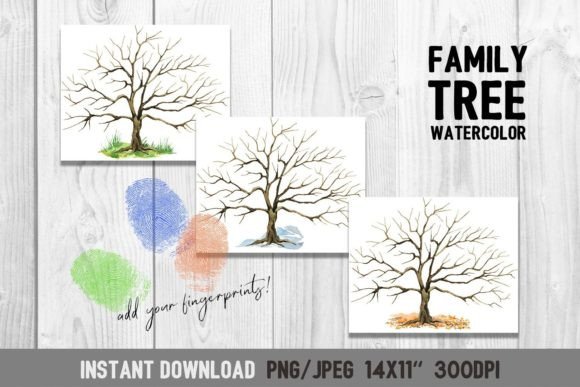
Integrating the Genealogical Fingerprint Family Tree into Professional and Creative Workflows
In the landscape of modern design and personal documentation, the demand for assets that bridge the gap between emotional resonance and technical utility is higher than ever. The Genealogical Fingerprint Family Tree represents a unique convergence of these needs. Unlike standard clip art or generic vector illustrations, this specific asset type—often realized as a hand-painted watercolor illustration without leaves—offers a structural canvas ready for customization. For professionals ranging from graphic designers and scrapbookers to small business owners and educators, understanding how to integrate these high-resolution elements into existing workflows is essential for maximizing efficiency and output quality.
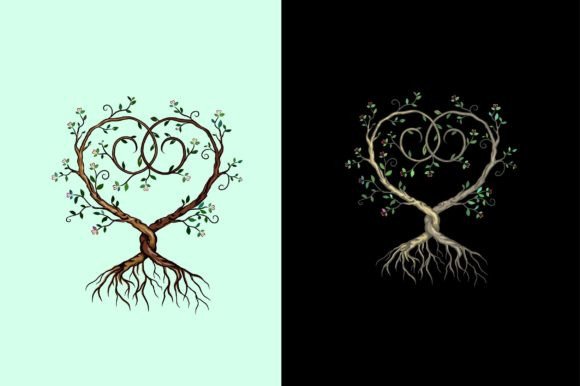
At its core, a genealogical tree without leaves serves as a foundational framework. It provides the branching structure necessary to map lineage, relationships, or organizational hierarchies without imposing a finalized aesthetic. When paired with fingerprint motifs, the asset transforms from a simple diagram into a personalized identifier. This duality makes it an incredibly versatile tool for various stages of a project, whether you are in the initial planning phase, executing a client deliverable, or archiving personal history.
Technical Specifications and Asset Preparation
Before diving into creative application, it is crucial to address the technical backbone of these assets. A professional workflow relies heavily on file compatibility and resolution. The standard offering for high-quality genealogical fingerprint trees typically includes four PNG elements with transparent backgrounds at a resolution of 300 DPI. These specifications are not merely marketing buzzwords; they are functional requirements for serious production.
The transparent background is perhaps the most critical feature for integration. It allows the tree structure to be layered seamlessly over any surface—be it a textured paper scan, a solid color cardstock, or a complex digital pattern—without the need for time-consuming masking or erasing in software like Adobe Photoshop or Affinity Photo. This saves significant time during the composition phase.
Furthermore, the 300 DPI resolution ensures that the asset remains crisp whether it is viewed on a high-definition screen or printed on physical media. For users involved in fabric printing, large-format announcements, or detailed stationery design, lower resolution files often result in pixelation that undermines the professional look of the final product. By starting with print-ready assets, you eliminate the risk of rework later in the process.
Strategic Implementation in Creative Projects
The utility of the hand-painted watercolor illustration fingerprint family tree extends across multiple disciplines. Its application varies depending on whether the goal is commercial production, personal archiving, or educational demonstration.
Stationery and Invitation Design
For stationery designers and freelancers creating announcement cards, these assets serve as the central visual anchor. The "no leaves" design is particularly advantageous here. It allows the designer to treat the branches as placeholders for actual fingerprints, names, or dates. In a wedding or birth announcement workflow, this means you can create a template where the client simply adds their specific data points. The watercolor texture adds a soft, organic feel that contrasts nicely with modern typography, appealing to clients seeking a balance between tradition and contemporary style.
When integrating these elements into invitation suites, consistency is key. Because the package usually includes multiple PNG elements, you can distribute the branches across different pieces of the suite—using a larger section for the main invite and smaller offshoots for RSVP cards or detail inserts. This creates a cohesive brand identity for the event without requiring custom illustration from scratch.
Digital and Physical Scrapbooking
In the realm of scrapbooking, both digital and physical, the genealogical tree acts as a storytelling device. Digital scrapbookers can drag and drop the PNG layers directly onto their canvases, adjusting opacity or blending modes to match the mood of the page. The transparency allows for intricate layering with journaling cards and photo overlays.
For physical papercraft creators and decoupage artists, the high-resolution PNGs can be printed onto premium photo paper or transfer sheets. The lack of leaves in the original illustration invites the user to engage in mixed media. You might stamp actual ink fingerprints onto the branches, adhere small dried flowers, or use calligraphy to write names directly onto the printed watercolor texture. This interactivity turns a passive image into an active part of the memory-keeping process.
Branding and Logo Development
Entrepreneurs and small business owners in the coaching, therapy, or heritage consulting sectors can utilize these trees for branding. A logo incorporating a fingerprint tree suggests growth, individuality, and connection. Since the assets come with transparent backgrounds, they can be easily imported into vector software like Adobe Illustrator for tracing or refinement, ensuring scalability for web and print logos. This approach allows for rapid prototyping of brand identities without the cost of commissioning a custom illustrator.
Workflow Integration and Process Optimization
To truly leverage the Genealogical Fingerprint Family Tree, one must view it as a component within a larger operational system. It fits naturally into the pre-production, production, and post-production phases of a project.
Pre-Production and Planning: During the conceptualization stage, these assets help visualize the end product. If you are planning a family reunion booklet or a heritage workshop, having the tree structure early allows you to determine layout constraints. You can assess how much space is needed for text versus imagery. The modular nature of the four PNG elements allows you to test different compositions quickly before committing to a final design.
Execution and Customization: During the active creation phase, the watercolor style reduces the need for additional texturing. Many designers spend hours adding grain or paper textures to digital vectors to make them look authentic. Starting with a hand-painted watercolor base bypasses this step entirely. You can focus your energy on typography, color correction, and layout balance. For educators teaching genealogy, these trees can be prepared as worksheets where students fill in the "leaves" with their own family data, turning a static image into an interactive learning tool.
Quality Control and Output: Before final delivery or printing, the 300 DPI specification ensures that a final proof check reveals no degradation in image quality. Whether the output is a digital PDF for a blog or a physical print on fabric, the source material holds up under scrutiny. This reliability reduces the friction often associated with client revisions regarding image clarity.
Compatibility with Tools and Platforms
The versatility of these PNG elements lies in their universal compatibility. They function smoothly across a wide array of software ecosystems:
- Adobe Creative Cloud: Perfect for Photoshop layers, Illustrator tracing, and InDesign layouts for professional publishing.
- Canva and Web-Based Editors: Ideal for bloggers and marketers who need to quickly assemble social media graphics or webinar slides without advanced technical skills.
- Cricut and Silhouette: While these machines prefer vectors, high-resolution PNGs can often be used for print-then-cut projects, enabling hobbyists to create custom stickers or iron-on transfers for fabric.
- Procreate and Digital Painting Apps: Artists can import the tree as a base layer and paint directly over it, adding details or modifying the watercolor effect to suit a specific artistic vision.
This broad compatibility ensures that the asset does not dictate the toolset; rather, it adapts to the user's preferred environment. Whether you are a tech-savvy developer building a web pattern or a traditional crafter working with paper and glue, the file format supports your methodology.
Long-Term Value and Scalability
Investing in high-quality genealogical assets offers long-term value beyond a single project. Once purchased and organized, these elements become part of a permanent resource library. A freelancer can reuse the base tree structure for multiple clients, simply altering colors or added details to ensure uniqueness. This scalability improves profit margins by reducing the time spent on asset creation for repeat jobs.
Moreover, the timeless nature of the watercolor aesthetic ensures that designs do not quickly become dated. Unlike trendy graphic styles that may fall out of favor, hand-painted textures maintain a classic appeal, making the assets viable for years. For publishers and content creators, this means the illustrations can be repurposed for future editions, updated blogs, or new product lines without needing a complete overhaul.
In conclusion, the Genealogical Fingerprint Family Tree is more than just a decorative image; it is a functional tool that streamlines the creative process. By providing a high-resolution, transparent, and artistically rendered foundation, it allows professionals and hobbyists alike to focus on customization and storytelling. Whether used for intricate scrapbooking layouts, professional branding, or educational materials, its integration into your workflow promises enhanced efficiency, consistent quality, and a deeply personal touch to every project.