Happy Bunny: A Hand-Painted Collection for Every Creator
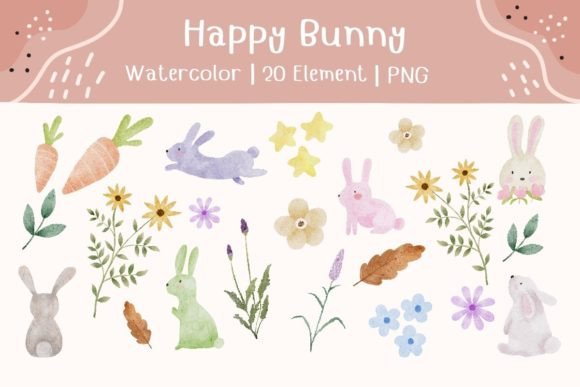
Imagine opening your digital design folder and finding a set of illustrations that feel less like generic clipart and more like little pieces of art waiting to be placed. This is the essence of the Happy Bunny collection. Featuring twenty unique elements, this set combines whimsical bunny characters with delicate floral accents, all meticulously hand-painted and carefully cut out by hand. The result is a series of transparent PNG files that offer a level of organic texture and charm often missing from vector-based or AI-generated graphics. Whether you are digitizing a planner, designing a wedding invitation, or adding a touch of warmth to a website, these assets provide a versatile foundation for creative projects.
The true value of this collection lies in its flexibility. Because each element is provided as a high-quality transparent PNG, it can be dragged and pasted onto any color background without unsightly white boxes or jagged edges. This technical simplicity belies the artistic effort involved; every petal and fur stroke was painted and isolated manually to ensure a natural look. For creators across various disciplines, this means spending less time editing images and more time focusing on the overall composition of their work.
Why Different Creators Value Hand-Painted Assets
While the visual appeal of the Happy Bunny set is immediate, the reasons for choosing it vary significantly depending on who is using it. A professional graphic designer might prioritize the resolution and transparency for client work, whereas a hobbyist scrapbooker might value the emotional resonance of the hand-painted style. Understanding these differing priorities helps in selecting the right tools for specific project goals.
For beginners and hobbyists, the primary concern is often ease of use. Complex software layers and masking tools can be intimidating. With this collection, the heavy lifting has already been done. The "drag-and-paste" functionality means that someone with minimal technical skills can still achieve a polished, professional-looking result. A parent creating a birthday invitation for their child can simply drop a bunny illustration onto a pastel background in a basic word processor or free design app, instantly elevating the presentation without needing to learn advanced photo editing techniques.
In contrast, experienced designers and freelancers often evaluate assets based on integration potential and commercial viability. They look for elements that can be layered, resized, and manipulated without losing quality. The fact that these twenty elements are hand-cut ensures that the edges retain the softness of a real brushstroke, which adds a human touch to digital layouts. This is particularly valuable for branding projects where a company wants to appear approachable and artisanal rather than corporate and sterile. A freelancer designing a logo for a boutique bakery or a children's bookstore might use the floral components to frame text, relying on the unique texture to differentiate their work from competitors using standard stock vectors.
Practical Applications Across Industries
The versatility of the Happy Bunny collection allows it to serve a wide array of industries and project types. Here is how different users might integrate these elements into their workflows:
- Planner Enthusiasts and Stationery Makers: The scale and detail of the illustrations make them perfect for printable planner stickers. Users can print the sheet, cut them out, or use them digitally in apps like GoodNotes. The combination of bunnies and flowers fits seamlessly into weekly spreads, habit trackers, or decorative headers, adding a cohesive theme to personal organization systems.
- Web Designers and Bloggers: In the realm of web design, breaking up large blocks of text with relevant imagery improves readability and engagement. These PNGs can be used as section dividers, favicon icons, or decorative corner elements on lifestyle blogs, parenting forums, or e-commerce sites selling spring-themed products. The transparent background ensures they blend naturally with any site color scheme.
- Educators and Teachers: Visual aids are crucial in education, especially for younger students. Teachers can use these friendly bunny characters to create classroom decorations, reward charts, or worksheet headers. The hand-painted style feels welcoming and less rigid than computer-generated clipart, helping to create a warm learning environment.
- Small Business Owners: For entrepreneurs selling handmade goods, packaging is a key part of the customer experience. These elements can be incorporated into thank-you cards, product labels, or social media graphics. Using consistent imagery across these touchpoints helps build brand recognition and conveys a sense of care and attention to detail.
Evaluating Quality and Long-Term Usefulness
When investing time in a new set of digital assets, considering long-term usefulness is essential. Unlike trend-heavy graphics that may look dated in a year, the classic combination of animals and flora possesses a timeless quality. The Happy Bunny collection avoids overly specific stylistic quirks that limit its application, making it a reliable resource for future projects.
Quality assessment also involves understanding the format. PNG is the industry standard for web and digital print when transparency is required. However, users should be aware that because these are raster images (pixels) rather than vectors, there are limits to how much they can be enlarged before pixelation occurs. For most standard uses—such as planner stickers, social media posts, and document headers—the provided resolution is typically more than sufficient. Professionals intending to use these for large-format printing, such as billboards or massive banners, should verify the specific DPI (dots per inch) of the files to ensure they meet their output requirements.
Furthermore, the "hand-painted" aspect offers a distinct advantage in an era increasingly saturated with AI-generated content. Consumers and clients are becoming more adept at spotting the uncanny smoothness or logical errors sometimes present in machine-made art. Human-created art carries subtle imperfections and textures that signal authenticity. For marketers and brand strategists, leveraging this authenticity can foster deeper connections with audiences who crave genuine human creativity.
Making the Right Choice for Your Project
Deciding whether this collection matches your needs comes down to aligning the asset's strengths with your project's goals. If your objective is speed and a whimsical aesthetic, these pre-cut elements are ideal. If you require absolute scalability for massive formats or need to alter the internal colors of the painting extensively, you might need to consider vector alternatives or commission custom work.
However, for the vast majority of creative tasks ranging from scrapbooking memories to designing home decor items, the balance of quality, convenience, and charm found in this set is hard to beat. It bridges the gap between amateur enthusiasm and professional polish. By providing twenty distinct elements, the collection offers enough variety to create complex scenes without overwhelming the user with too many choices.
Ultimately, tools like the Happy Bunny collection are about empowerment. They allow a teacher to make their classroom brighter, a blogger to make their site more inviting, and a small business owner to package their goods with love. The value isn't just in the image itself, but in what it enables the creator to achieve. Whether you are dragging a flower onto a digital journal or pasting a bunny onto a party invite, the goal is to add a spark of joy to your work. When the technical barriers are removed, creativity flows more freely, allowing the focus to remain on the message and the emotion behind the design.
As you explore your next creative endeavor, consider how the right assets can streamline your process and enhance your final output. The intersection of utility and beauty is where great design happens, and collections that honor both hand-crafted tradition and digital convenience play a pivotal role in that journey. By choosing resources that resonate with your specific audience and project type, you ensure that your work not only looks good but feels right.