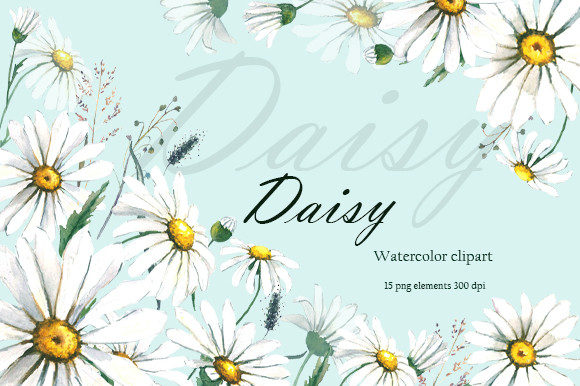
Elevating Design Projects with Premium Daisy Watercolor Clipart
In the evolving landscape of digital and print design, the demand for authentic, organic textures has never been higher. As creators move away from sterile, vector-based perfection, there is a renewed appreciation for the imperfections and fluidity found in traditional media. At the forefront of this aesthetic shift is Daisy Watercolor Clipart, a versatile resource that bridges the gap between hand-painted artistry and modern digital utility. Whether you are a professional graphic designer, a small business owner creating branding materials, or a hobbyist crafting wedding invitations, understanding the nuances of high-quality watercolor elements can significantly enhance the visual impact of your work.
The Artistic Value of Hand-Painted Digital Elements
The term "hand-painted" carries significant weight in the design community. Unlike algorithmic filters or automated texture overlays, genuine hand painted watercolor clipart retains the unique characteristics of the physical medium. This includes the subtle pooling of pigment, the granulation of paper texture, and the soft, bleeding edges that define the watercolor style. When these elements are digitized into high-resolution files, they offer the best of both worlds: the emotional resonance of traditional art and the convenience of digital manipulation.
A standard set of premium daisy flowers and branches typically includes a variety of compositions. You might find isolated blooms, sprawling branches, individual petals, and even foliage variations. The beauty of using Daisy Watercolor Clipart lies in its ability to convey freshness, innocence, and natural elegance. Daisies are universally recognized symbols of purity and new beginnings, making them an exceptionally powerful visual tool for communications centered around celebrations, growth, and positivity.
Technical Specifications and Quality Standards
For any digital asset to be truly useful across diverse projects, technical quality is paramount. A professional-grade clip art pack should not merely be a low-resolution scan intended for screen viewing. Instead, it must meet rigorous standards suitable for large-format printing. High-quality sets often provide files at approximately 3000 x 3000 pixels, which translates to roughly 10x10 inches at 300 DPI (dots per inch). This resolution ensures that when the image is printed on wedding stationery, posters, or fabric, the edges remain crisp, and the color gradients do not pixelate.
Furthermore, the file format plays a crucial role in workflow efficiency. The industry standard for transparent graphics is the PNG format. Receiving elements as separate RGB PNG files allows designers to layer images without unsightly white boxes or backgrounds interfering with the composition. This transparency is essential for creating seamless overlays on photographs, colored cardstock, or patterned digital backgrounds. A comprehensive pack usually contains around 15 distinct elements, providing enough variety to construct complex scenes without repetition.
Diverse Applications Across Industries
The versatility of Daisy Watercolor Clipart extends far beyond simple decoration. Its application spans numerous industries, each leveraging the aesthetic for different psychological and functional outcomes.
Wedding and Event Stationery
Perhaps the most prominent use case for floral watercolor elements is in the wedding industry. Couples increasingly seek personalized, boutique-style invitations that feel handmade and intimate. Daisy branches and flowers are perfect for framing names, separating text blocks, or creating intricate borders on save-the-dates, menus, and programs. The soft nature of watercolor complements the romantic and celebratory tone of these events. Because the files are high resolution, they can be printed on textured papers like cotton or linen without losing detail, adding a tactile dimension to the invitation suite.
Branding and Logo Design
For businesses in the wellness, beauty, organic food, or childcare sectors, a logo featuring hand-painted daisies can communicate approachability and natural integrity. Unlike sharp, geometric logos, a watercolor-based brand identity suggests flexibility and human touch. Entrepreneurs can utilize these clip art elements to build a cohesive visual language across business cards, packaging labels, and social media headers. The ability to isolate specific flowers or leaves allows for the creation of unique icons that serve as recognizable brand marks.
Digital Content and Web Design
In the digital realm, blog owners and content creators use Daisy Watercolor Clipart to break up text and add visual interest to articles. These elements work exceptionally well as dividers, bullet points, or background watermarks. For educators and researchers creating presentations or online courses, floral accents can soften the visual tone, making complex information feel more accessible and less intimidating. Additionally, these graphics are ideal for creating downloadable planners and journals, where the aesthetic appeal encourages users to engage with the material regularly.
Implementation Strategies for DIY and Professional Projects
Integrating these assets into your workflow requires a strategic approach to ensure the final output looks polished and professional. Whether you are using advanced software like Adobe Photoshop and Illustrator or user-friendly tools like Canva, the principles of composition remain consistent.
- Layering for Depth: To avoid a flat appearance, overlap different elements from the clip art set. Place a daisy branch behind a text box and a single bloom in the foreground to create a sense of three-dimensional space.
- Color Harmony: While watercolor daisies often come in natural whites and yellows with green foliage, consider how they interact with your background colors. Soft pastels, creams, and muted earth tones generally complement the watercolor style best, maintaining the organic feel.
- Scaling and Rotation: Do not be afraid to rotate the elements. Natural growth is rarely perfectly vertical or horizontal. Slight rotations can make a arrangement look more dynamic and less "stamped."
- Mixing Media: Combine the hand painted watercolor clipart with typography that matches the mood. Script fonts enhance the romantic vibe, while clean sans-serif fonts provide a modern contrast that lets the artwork stand out.
Physical Crafts and Fabric Printing
Beyond paper and screens, these high-resolution files are robust enough for physical crafting techniques such as decoupage and papercraft. Hobbyists can print the designs onto transfer paper to apply them onto wood, ceramics, or fabric. The 300 DPI resolution ensures that even when printed on textile materials for tote bags or apparel, the fine details of the flower petals remain visible. This opens up avenues for small businesses to create custom merchandise without needing to commission original paintings for every item.
Considerations for Licensing and Usage
When sourcing Daisy Watercolor Clipart, it is vital to understand the licensing terms associated with the download. Most instant download packs are designed for both personal and commercial use, but restrictions may apply. For instance, some licenses allow you to use the elements in a finished product (like a wedding invitation you sell) but prohibit reselling the digital files themselves as standalone clip art. Always review the description provided by the creator to ensure compliance.
Additionally, consider the color profile. Most digital files are provided in RGB, which is optimized for screens. If your primary output is professional offset printing, you may need to convert these files to CMYK. High-quality watercolor scans usually convert well, but it is advisable to print a test sheet to check for any shifts in the delicate green or yellow hues before committing to a large print run.
The Enduring Appeal of Floral Motifs
Trends in design may fluctuate between minimalism and maximalism, but floral motifs, particularly daisies, possess a timeless quality. They resonate with a broad audience because they connect us to nature. In an increasingly digital world, the inclusion of Daisy Watercolor Clipart in a project serves as a reminder of the organic world. It adds a layer of warmth that pure digital graphics often lack.
For educators, these images can be used to create engaging learning materials about botany or seasons. For researchers, they can soften the visual presentation of data-heavy reports. For consumers, they add a touch of elegance to home decor projects. The key is to view these clip art packs not just as images, but as building blocks for storytelling. Each petal and leaf offers an opportunity to convey emotion and set a tone.
Maximizing Value from Digital Downloads
To get the most out of a 15-file element pack, creators should think modularly. Instead of using the pre-composed branches exactly as they are, consider deconstructing them if the license permits, or using individual flowers to create entirely new arrangements. This approach ensures that your designs remain unique and do not look identical to others who may have purchased the same set. By combining the daisy elements with other textures, such as scanned paper grains or ink splatters, you can further customize the look to fit specific brand guidelines or project themes.
In conclusion, the integration of high-quality, hand-painted watercolor elements into your design toolkit is a strategic move towards more empathetic and visually rich communication. Whether utilized for a delicate wedding invitation, a bold poster campaign, or a intricate scrapbook page, Daisy Watercolor Clipart provides the resolution, flexibility, and artistic charm necessary to elevate any creative endeavor. By understanding the technical specifications and exploring the wide range of applications, creators can harness the full potential of these beautiful digital assets.